Looking for bricks, roofing or landscaping products?
Visit our main website.
Looking for bricks, roofing or landscaping products?
Visit our main website.
Brick slip cladding is a non-structural method of applying thin slices of brick, known as brick slips, to a backing system. The system is then fixed to a structural wall or frame to replicate the appearance of traditional brickwork.
This method is used instead of full-size bricks to cover internal walls and navigate difficulties associated with traditional bricklaying, such as weather-dependent construction, spatial restrictions and weight implications.
It’s a versatile solution used for both residential and commercial projects. However, the choice of cladding system and brick slips must be carefully considered for the specific application before specification.
This guide covers the key factors for specifying brick slip cladding systems, including usage, installation options, slip requirements and bespoke aesthetics to help you select the best products for your project.
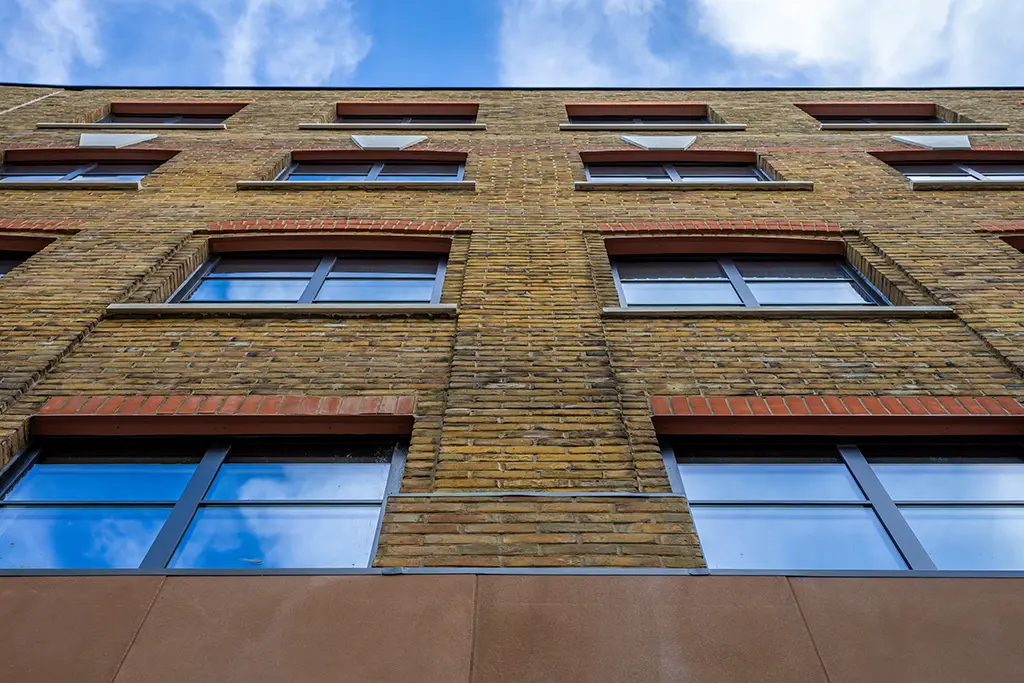
There are many uses for brick slip cladding, one of which you may already be considering. We’ll run through some popular options for specifying brick slips and cladding systems where full-size bricks may not be the most practical option.
Internal Walls:
External Facades:
If you’re considering whether a slip cladding system is the right choice for your project, our brick slips vs bricks comparison guide compares the two in detail.
Your choice of installation method will depend on the compatibility of the substrate.
For brick slips, there are four main installation options available to review.
Brick slips are bonded directly onto a prepared substrate using appropriate adhesive, in a similar way to traditional tiling. This method is most often used for internal residential applications and small-scale external retrofit projects.
For external applications, adhesives must be non-combustible, frost-resistant and suitable for external exposure, in accordance with the system manufacturer’s guidance and building regulations.
Insulated backing boards are fixed to an existing substrate, which could be a wall or structural frame. Brick slips are then applied to the insulating board with adhesive.
EWI systems can be used internally or externally and provide additional insulation to a property. For external use on buildings over 18m in height, the system must be non-combustible and hold specific certification for high-rise applications.
Mechanical systems consist of metal track frameworks fixed to a structural substrate, with horizontal guide rails that secure grooved brick slips by sliding, clipping or pushing them into place.
As slips are mechanically fixed rather than bonded with adhesive, this system can be used for both internal and external cladding, including high-rise applications.
Precast systems involve casting profiled clay brick slips (grooved or keyed) into either standard or glass reinforced concrete (GRC) panels off-site. Once set, panels are transported to site for quick installation.
Though they can be used internally, a precast system is most often specified for external applications due to the need to pre-manufacture panels, combined with their size, weight and transport implications. Many large-scale residential and commercial projects use this method of cladding.
If you aren’t sure which cladding system would be best for your project, read our external brick slip systems comparison guide.
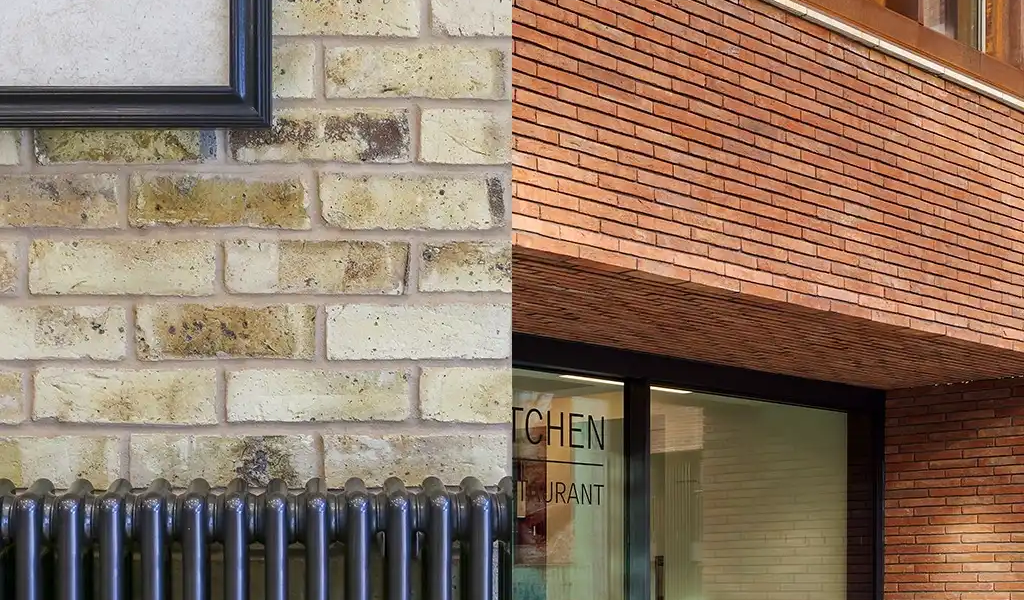
Regardless of the installation method you choose, brick slips can be used for both internal walls and external substrates. However, there are different material requirements that must be considered for each application.
For internal wall applications, the majority of brick slip products, tile adhesives and pointing mortars are suitable, providing they’re compatible with the backing surface.
The main consideration is likely to be aesthetic, along with any product preferences of the client or installing contractor.
Product preference examples:
Brick slips for external applications will have technical requirements which depend on the cladding system you choose.
Some of these include:
Many clay brick slips are F2 rated for frost resistance and have A1 non-combustible classification as standard, but your cladding system manufacturer will be able to advise on the specific slip requirements for compatibility with their product.
Brick slip dimensions matter most for cladding system applications, and less for direct adhesion installs.
The standard metric brick slip dimensions are 215mm x 65mm x 20mm, installed with a 10mm mortar joint. Some suppliers also offer alternative imperial size dimensions for matching existing brickwork used on older properties.
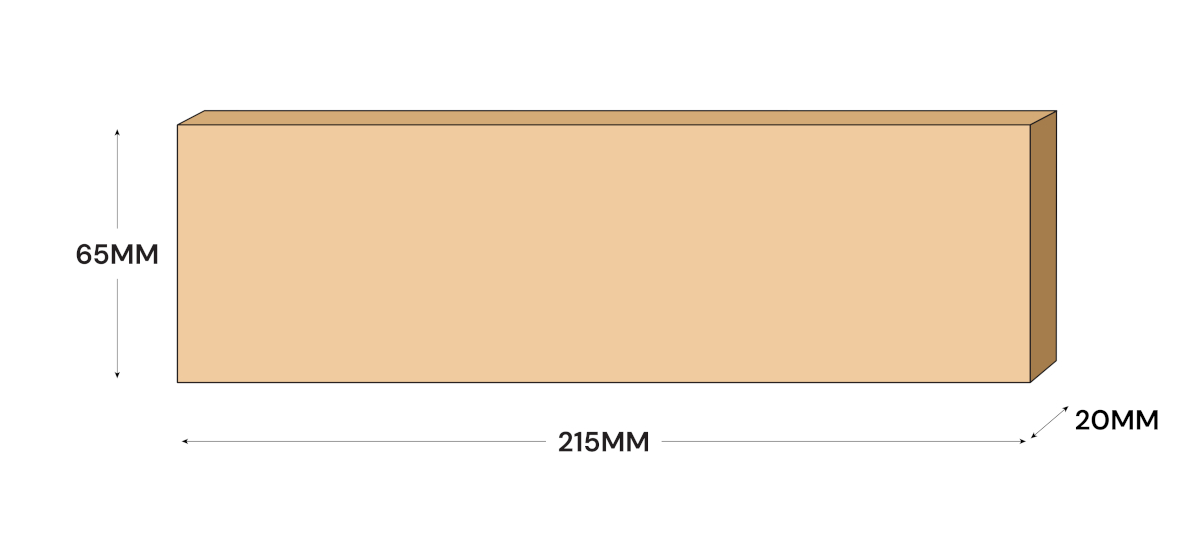
For direct adhesion, dimensions are down to preference. Contractors may prefer to work with the standard size or a client may want to use an imperial size for an authentic, traditional look. The only dimension that may need additional thought is the thickness. The standard is 20mm, but slips can come in a range of thicknesses and some clients may prefer a thinner slip so they protrude less from the wall.
When considering cladding systems, you need to ensure slip dimensions are compatible. While the standard metric face size is usually preferable, thickness will be dictated by the system type. For example, 14-20mm is generally suitable for EWI boards, but thicker, profiled slips are needed for mechanical and precast options. Always check the exact requirements with the manufacturer.
When specifying brick slips, standard off-the-shelf options may not always be suitable.
The main scenarios for this are:
Mechanical systems typically require slips with a continuous groove, while precast systems require a keyed (or grooved) back profile to bond with the concrete panel. Pre-cut or moulded options in these profiles can be limited, so bespoke cutting is often necessary.
Additionally, you may need to specify a particular type, colour and finish of slip. In any of these scenarios, choosing a bespoke brick slip cutting service is often the best option.
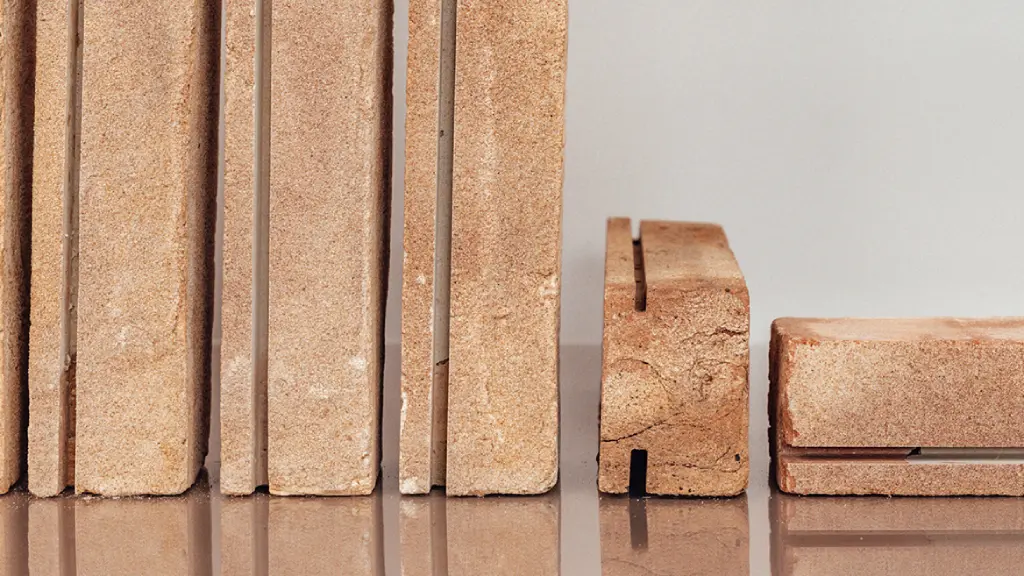
Above: Example of grooved brick slips for a mechanical cladding system.
Several brick suppliers offer this service. Full-size bricks with compatible qualities, such as low water absorption, can be cut and grooved or keyed to order for your project. This provides a broader choice of brick slip products, ensuring you can achieve the required aesthetic without compromising on your design or system choice.
With these key brick cladding considerations in mind, you should be confident in taking the next steps to source and specify suitable products.
To recap:
If you’re ready to explore brick slip options, we have ranges suitable for each type of cladding system:
We also offer brick slip cutting for all types of cladding systems, so feel free to get in touch with your requirements and our team will be happy to help.