Looking for bricks, roofing or landscaping products?
Visit our main website.
Looking for bricks, roofing or landscaping products?
Visit our main website.
You’ve decided to use an external brick slip system for your current client project, but which one should you choose?
You might also know the look you’re going for at this point, but can you achieve it with a slip system that works with your proposed designs?
Both very valid questions.
With the ongoing push for working with Modern Methods of Construction (MMC), brick slip systems can revolutionise what’s achievable, especially when you want the traditional look of a brick facade, but need a speedier installation.
There are three main types of brick slip cladding systems which are each suited to different project requirements:
Selecting the ‘best’ one for your client design, whilst still maintaining that desirable traditional masonry aesthetic can feel a bit of a minefield.
We’ll run through the benefits, considerations and brick slip requirements for each system to help you make the best choice for your client project.
An EWI system is used to improve a building’s thermal performance.
It consists of fixing insulation boards (usually made of EPS, phenolic foam or mineral wool) to exterior walls and covering them with a basecoat render, which is then scored. The final layer is either decorative render or cladding.
In this case, the cladding finish would be brick slips which are applied in the same manner as an internal installation – by measuring and fixing slips with flexible adhesive, spacing the joints and pointing the mortar gaps.
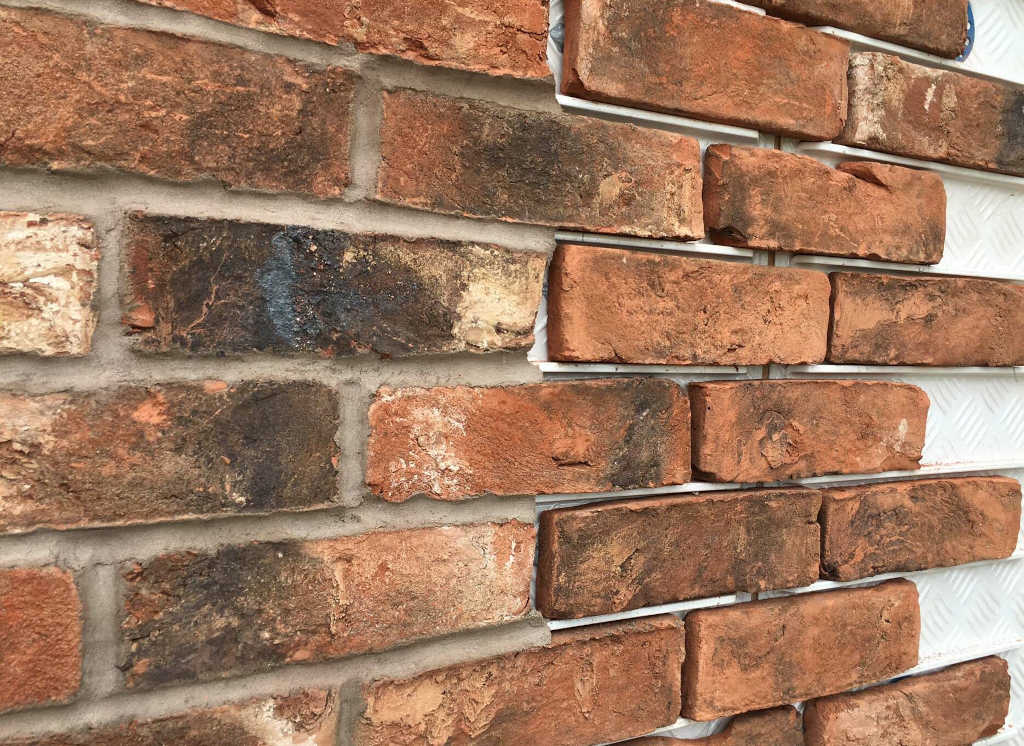
When using brick slips with an EWI system, there are a few key benefits to consider.
Aesthetic enhancements
You can completely change the look of an existing building/wall.
Got ugly bricks or render? You can hide them!
Improves energy efficiency
The continuous layer of insulation improves U-values and reduces cold spots or drafts, which can reduce energy bills.
A great incentive for your client.
Durable and low maintenance
Compared to thin coat render finishes which can crack and become patchy over time, brick slips provide superior weather resistance and durability. Providing they’re installed properly, they require minimal maintenance, meaning reduced long-term upkeep costs and peace of mind for your client.
Sound insulation
As well as providing thermal insulation, the insulation layer teamed with brick slips provides extra sound insulation.
Great if the building’s in a built-up or noisy area.
Budget friendly
Compared to mechanical and precast brick slip systems, this one is the most cost effective. There are no huge mechanical structures or precast sheets involved, no off-site construction to budget for and all the materials required are easy to transport to site.
Though a great all-round choice for smaller budgets, there are a couple of things to consider if you’re choosing EWI application for your brick slips.
Height restrictions
We won’t get into this too much as we’re sure you’re aware, but due to the strict regulations on combustible materials in external wall cladding systems over 18m in height, brick slip EWI systems aren’t suitable.
You can work around this if you’re using A1-rated mineral wool insulation (subject to meeting fire safety requirements), but generally, you’ll want to be using a mechanical or precast system if you’re exceeding this height.
Load bearing considerations
Compared with a render finish, brick slips will add more weight to the substrate so structural assessment prior to install is essential.
Water Absorption Rating
Brick slips need to have a water absorption rating of less than 7% to prevent risks of frost damage, efflorescence, and to reduce water saturation adding additional weight.
You will need to check your chosen EWI system manufacturer’s guidelines for the exact figure.
Weather Dependent
Similar to building traditional brickwork, the weather will affect installation. Ideally, you need dry conditions, making the installation weather reliant.
Wet or cold conditions can compromise brick slip adhesion and curing, so installation needs to be precise and performed by skilled and experienced contractors, or you risk moisture issues and efflorescence.
Primarily, you’d choose this system to improve the thermal insulation and energy efficiency of an existing building. Though, you can still use it if the building already has good insulation.
When using EPS or phenolic foam insulation boards, as long as the existing building is under 18m in height, EWI is a great choice.
It allows you to effectively ‘hide’ the wall behind and completely change its aesthetic appeal – if that’s what you’re aiming for.
In terms of budget, it’s on the lower end of the scale and is therefore more accessible for your smaller builds. Think extensions, retrofits and refurbs.
For EWI systems, standard brick slips with a thickness of 14-20mm are usually recommended. These are lightweight slips with a smooth/flat back, which adhere to the scored basecoat render using a flexible adhesive.
For cladding around corners, reveals or cills, standard brick slip corners are widely available from most suppliers.
Generally, EWI brick slips are easy to source and you should find plenty of options to suit your design plans, just make sure the slips have a low water absorption percentage.
To install brick slip cladding using a mechanical system, metal rails are fixed to a structural substrate such as concrete, blockwork, steel frame or even external wall insulation (EWI) boards.
Vertical rails are fixed into the structural backing, followed by horizontal guide rails installed at appropriate intervals. Depending on the mechanical system you choose, brick slips are either slid, clipped or pushed securely into place before being pointed with mortar.
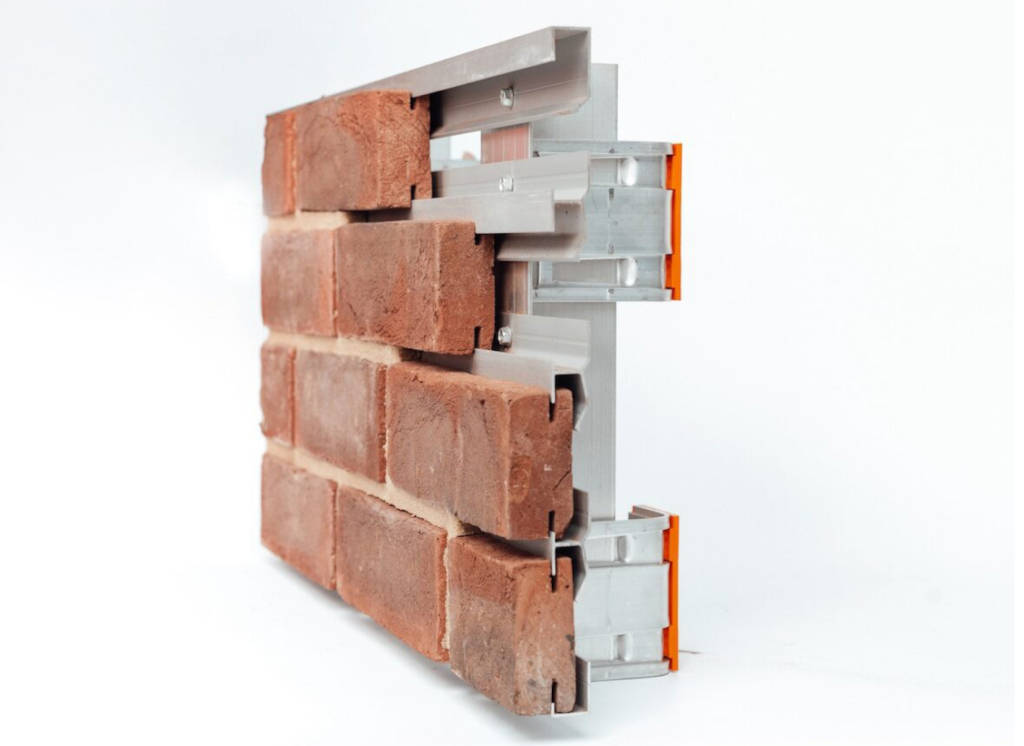
Mechanical slip systems have a multitude of benefits.
Fire Safety
Mechanical systems, specifically aluminium rails and clay brick slips, have A1 non-combustible classification, meaning they can be safely used at 18m+ heights.
Lightweight
Compared to traditional brickwork, a mechanical cladding system puts less demand on the building’s foundations and supporting structures.
Typically around 50% lighter!
Installation Speed
Compared to EWI, mechanical systems are much quicker to install.
A great choice if you have a tight on-site construction window.
Labour Cost Saving
When compared to traditional bricklaying, mechanical systems are faster to install, meaning reduced labour and transport costs.
Full-size bricks are heavy and bulky to transport and need more space on site, which means scaffolding is up for longer.
Less Weather Dependent
It’s raining and cold? Guess what, you can still install in most weather conditions. The only part of the install that’s weather dependent is mortar pointing.
Less time waiting around for a break in the rain, which in the UK, can be a bit problematic!
With the myriad of benefits, there are still a few considerations to keep in mind if you’re choosing a mechanical system for your brick slip cladding.
Lead Times
Though on-site install can be quick, system manufacturers can have lengthy lead times. Make sure to take this into account if your client has a tight timeline.
Specialist Installers
Not every contractor will be skilled in installing every system. Ideally, you’ll need to get an approved installer list, or find independent contractors with specific experience in installing your chosen system.
Thermal Performance
Unlike EWI systems, mechanical brick slip systems don’t provide insulation – you’ll need a separate insulation strategy. The metal rails can also create thermal bridges (cold spots), so thermal breaks may be needed.
Always check your insulation method is compatible with your chosen system manufacturer.
If you’re designing a new build at height, mechanical systems are a great option.
There’s no reliance on adhesives to hold brick slips in place and the same movement joints used for traditional brickwork can also be used for mechanical systems.
Budget-wise, it’s in the middle. It’s not as costly as precast concrete or GRC, but does require more investment than EWI. However, there are still savings to be made regarding install and time on site against traditional brickwork methods.
For mechanical systems, there are many types and varieties of brick slips available to use.
Brick slips for mechanical systems are typically thicker than standard (approx. 20-28mm) to allow for the groove cuts that hold the slips into the horizontal rails.
Some suppliers offer great ranges, however, you may need to have slips cut and grooved especially for your chosen system.
There are two options for precast systems. Though a similar process, they have a distinct difference:
Basically, GRC is lightweight and decorative, while concrete is heavy and structural.
To create the panels, brick slips must either be grooved or have stainless steel rods inserted and resin-fixed. The slips are then laid face down in a lined mould before pouring concrete or GRC. Once cured, the bricks are ‘interlocked’ with the concrete/GRC which creates a solid bond.
These large panels are then stored ready for timed delivery to site where they’re quickly craned into place.
Precast systems have many benefits for large-scale commercial and residential projects.
Off-site manufacture
Manufacturing precast panels off-site reduces time and costs on-site. It’s also a great option for installing in built-up areas where on-site space is limited. Think of inner city areas, like London – transport is difficult at the best of times.
Installation speed
Precast is the fastest type of brick cladding system to install. As the brick slips are embedded off-site, on-site installation is much quicker than mechanical and EWI slip systems.
Ideal when you’re under site time constraints.
No weather dependency
The panels are already cured and ready for install, so the unpredictable British weather isn’t going to set your timeline back.
There’ll be no waiting around for the rainclouds to break with this system!
Fire safety
Concrete, Glass Reinforced Concrete (GRC) and clay brick slips are all A1 rated non-combustible materials, making precast cladding low-risk. As the slips are permanently bonded during manufacture, you can safely specify this option for 18m+ designs.
Alongside all the benefits of choosing a precast system, there are a few points to be mindful of.
Weight
Although GRC is lighter than traditional concrete panels, they’re both heavier than a mechanical slip system, so there are increased structural demands.
Cost
Out of all the brick slip systems available, this one is the most costly. There’s the upfront panel manufacture, bespoke moulds and a lot of logistics planning to get the panels to site.
Multiple timed site deliveries and a crane costs quite a bit more than a team of traditional bricklayers or installers and some scaffolding!
Thermal performance
Just like mechanical brick slip systems, precast systems don’t provide insulation and you need a separate strategy.
Always check your insulation method is compatible with your chosen system manufacturer.
Logistics
Timely deliveries are required in accordance with each panel installation, you don’t want installers waiting ages for the next delivery and equally, you don’t want too many panels on site at once.
Compared to mechanical and EWI system materials, that’s a lot of deliveries for the contractors to coordinate.
Pre-install lead times
As you can imagine, precast panels take time to make, so although on-site installation is fast, off-site production can take several months depending on the manufacturer’s lead times.
You can often mitigate this by running groundworks alongside the panel manufacture.
Precast systems are ideal for commercial builds and large residential developments. They’re best if you need quick on-site installation, don’t want to navigate weather restrictions and are designing new builds at height.
For sites with limited access and site space – think of London or Manchester – a precast system can also be the best option.
Where budget is concerned, this option will always be at the higher end compared to mechanical for high-rise, especially with upfront costs. However, you need to consider the trade-off with construction speed – a mechanical install will take longer.
There are a wide variety of choices when selecting grooved brick slips for precast brick slip systems.
Wide ranges of handmade, extruded and pressed bricks can all be used, with the thickness of the slips depending on how they’re being bonded with the concrete or GRC.
Often, full-size bricks must be grooved to specification to be compatible with your chosen system manufacturer. Grooves such as chamberlain and dovetail are common, as well as cutting already-perforated bricks into slips (the perforations become the ‘grooves’).
| Factor | EWI Systems | Mechanical Systems | Precast Concrete/GRC Systems |
|---|---|---|---|
| Best For | Retrofit Thermal upgrades |
High-rise New builds Commercial fits |
High-rise Large new builds Modular designs |
| Typical Building Height | Under 18m | Any height (18m+) | Any height (18m+) |
| Fire Rating | A1 (mineral wool) to B/E (foam insulation) | A1 non-combustible | A1 non-combustible |
| Installation Speed | Moderate | Fast | Very Fast |
| Weather Dependency | High | Moderate | Low |
| Thermal Performance | Excellent | Requires separate strategy | Requires separate strategy |
| Cost | ££< | £££ | ££££ |
| Brick Slip Profile | Standard Flat Back |
Grooved | Grooved Keyed |
| Lead Time | Short | Moderate | Long |
Here are some initial considerations to align your plans with a suitable brick slip system:
Each brick slip cladding system choice has its own advantages, such as EWI for thermal retrofits, mechanical for high-rise and cost saving against traditional brickwork, and precast for commercial and residential high-rise needing fast on-site installs.
While each system has specific technical requirements for the brick slips themselves, your aesthetic choices aren’t as restricted as you may think.
For EWI brick slips: As long as the brick slips have a low water absorption rate, you’ll find plenty of choice
For mechanical brick slips: most brick types and finishes can be used and adapted through grooving
For precast brick slips: most brick types and finishes are available when using grooved or keyed profiles
We supply brick slips suitable for all three installation methods, and have the capability to cut and profile bricks to meet your chosen system requirements.
Browse our brick slip ranges by system type and if you see any you like, request samples to make sure they fit your client’s aesthetic vision.