Looking for bricks, roofing or landscaping products?
Visit our main website.
Looking for bricks, roofing or landscaping products?
Visit our main website.
If you’re researching how brick slips are cut, your reasoning likely comes down to one of two situations:
Use the links below to jump directly to the information which suits your situation best. Alternatively, if you want to broaden your knowledge and understand how slips are made, read on.
How to Cut Brick Slips You Already Have >
How are Brick Slips Made? >
Cutting Brick Slips From Bricks Yourself >
Pre-Cut Slips, Special Profiles and Services >
Brick Slip Cutting FAQs >
Should You Cut Brick Slips or Buy Pre-Cut? >
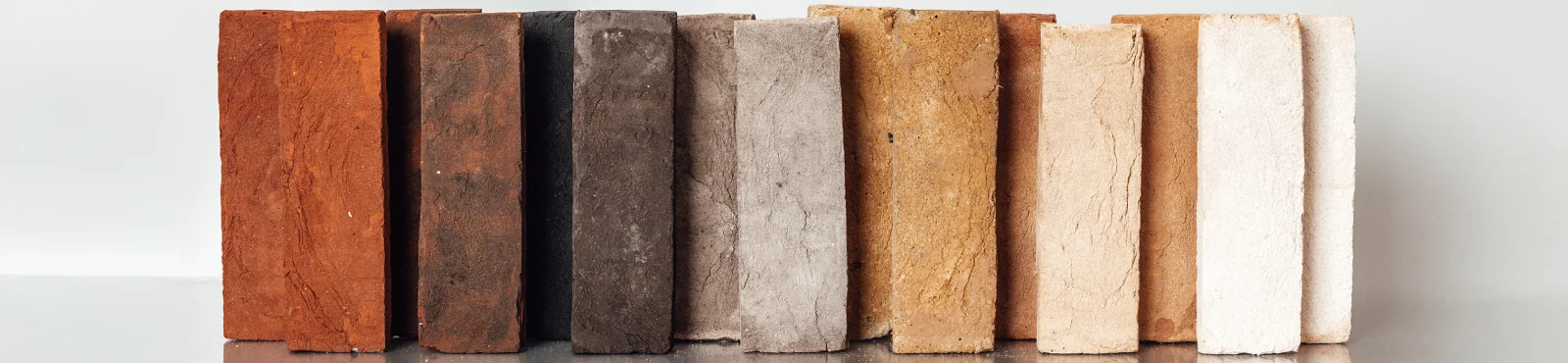
As with any DIY project, to cut and trim brick slips around obstacles and corners, you’ll first need to make sure you have a few tools to hand.
Once you have these, cutting a slip is quite simple:
Tip: If you’re using adhesive to fix your slips to an internal wall, always let wet-cut slips dry out first. Failing to do so risks the adhesive not adhering correctly and the slips popping off the wall later on.
Before we let you wander off to find some tools, it’s worth clarifying why we insist on wet cutting rather than dry cutting brick slips.
Health and Safety
The most important concern is airborne dust. Cutting slips produces fine dust which contains respirable crystalline silica (RCS) – a substance which is hazardous to respiratory health. Wet cutting uses a continuous water feed over the blade to suppress dust levels, and combined with a suitable dust mask, reduces risks from exposure.
Cut Quality
Wet cutting is more accurate and produces cleaner results. Clay slips can be brittle and dry cutting can cause the edges to chip off. The water keeps the blade cool, minimises chipping and reduces wastage from bad cuts.
Tip: If you’re concerned about the cost of purchasing a wet cutting saw, you can hire one locally for the duration of your project.
When Dry Cutting is Acceptable
By all means, if you only need to make a couple of simple cuts and already have an angle grinder with a diamond blade to hand, feel free to use it. Just make sure you do so outside, wearing a mask and safety glasses. For anything more than a couple of cuts, this method can be messy, inaccurate and impractical.
As a company that cuts tens of thousands of slips each week, we use heavy-duty industrial wet saws alongside a dust extraction system and full safety gear. Our advice comes from first-hand workshop experience and our priority is to advise you on the best solution for your project without compromising your health.
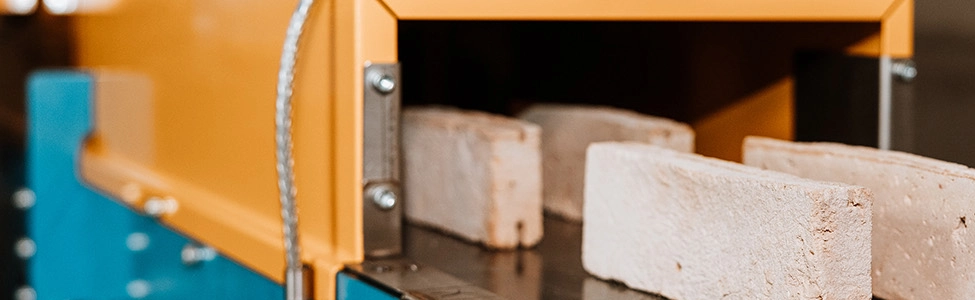
Brick slips, or brick tiles as they are also known, are made in one of two ways.
Cutting the faces off new or reclaimed full-size bricks is the most common way to produce slips. Many manufacturers and suppliers use this method, which produces two usable slips per brick if they’re faced on both sides. The remaining inner section of brick is then recycled into aggregate for landscaping and groundworks, or otherwise disposed of.
The process of moulding brick slips is similar to full-size bricks. Machine-made slips are extruded or pressed by a machine, while handmade slips are produced by throwing a clot of clay into a mould and striking off the excess with a wire bow.
Just like full-size house bricks, brick slips are made of clay and are either handmade, extruded or pressed.
Clay is a natural material which has been used to manufacture bricks for centuries; brick slips are simply a thinner slice of those bricks.
The different brick colours you see in stores and online are determined by the firing temperature and the combination of minerals in the clay, such as iron oxide, lime and chalk.
Now you know that many slips are cut from existing bricks, you may be curious about whether you can do it yourself…
If you have your eye on some full-size bricks, or already have some in your possession and need to cut them into slips, you might be wondering about the best way to do it.
Full-size bricks come in a wider range of colours and finishes than off-the-shelf brick slip options. This is one of the reasons people decide on cutting bricks, along with needing to match slips to existing brickwork and wanting to save money.
If you’re an avid DIYer and are keen to give it a go, there are a few things to think about beforehand.
Note: Although it sounds similar, we’re not talking about the simple cuts for a DIY install, we’re looking at cutting full-size bricks into brick slips.
Equipment
If you don’t already own a wet cutting saw, it can be expensive to purchase. You can of course hire one, but remember to also factor in any diamond blade wear charges. You’ll also need to be familiar with setting up an adjustable cutting guide or stop block to keep the thickness of the slips consistent.
Time
To cover just one wall you’re going to need to cut a lot of slips. There are 60 metric size slips in a square metre (m²), multiply that by the coverage of your wall and you quickly need to make hundreds of cuts. That takes a significant amount of time when you’re cutting one by one.
Wastage
Once you’ve cut the faces off the bricks, you’re left with the inner section which you’ll need to either dispose of or recycle. This can’t be thrown in your household wheelie bin so you’ll need to check local recycling centres for how to get rid of it safely.
Health and Safety
As we mentioned earlier, all those slips you’ll be cutting inevitably produce brick dust. The dust contains silica which poses a risk to respiratory health.
Wet cutting reduces the amount of airborne dust, but doesn’t eradicate it completely. At a minimum, you’ll need an FFP3 dust mask, eye protection and gloves.
You’ll also have the not-so-fun clean up of brick slurry afterwards, produced from the water mixing with brick dust, which can’t be washed down household drains.
Weighing up these factors will have led you to one of two paths. If it’s confirmed you’re comfortable DIYing the task, go for it – we’re happy to have helped you decide. But if your initial enthusiasm has withered away, there are alternative options available.
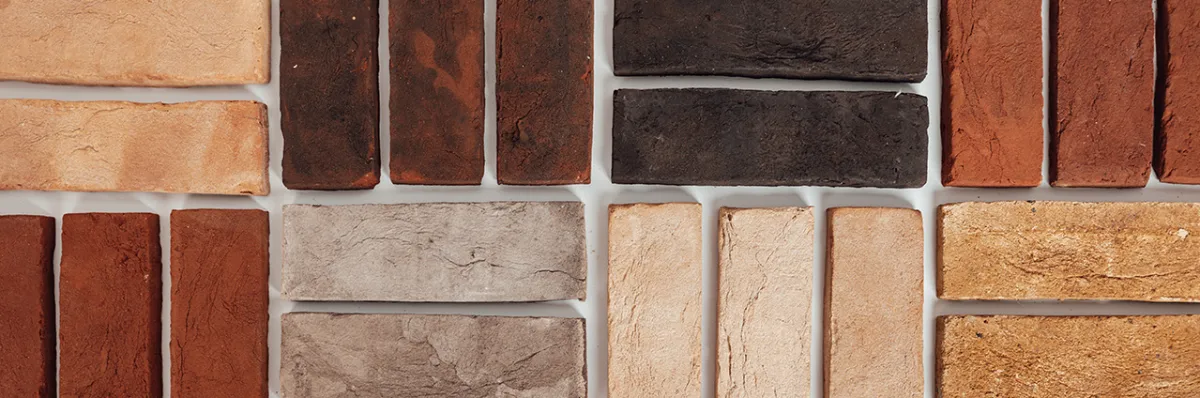
If you’ve decided the DIY route isn’t your thing, or wasn’t even a consideration from the start, you can purchase pre-cut brick slips, or if you already have the bricks you want, use a professional brick slip cutting service.
If you’re thinking about buying standard pre-cut brick slips, the process is straightforward. All you need to do is work out how many you need, check if you need any corner slips, order some samples, then proceed to purchase.
Most suppliers deliver all over the UK and tend to keep good stock levels, so you have plenty of styles to choose from.
Tip: Work out how many brick slips you need with our brick calculator tool and check how to measure for corner slips with this formula.
If you already have bricks, or you’ve found some you want to buy, using a cutting service can save you the time and hassle of doing it yourself.
Several brick suppliers offer this service, or alternatively there will be tradesmen in your local area who can help.
Tip: If you decide to use a professional cutting service, make sure to check transport options and costs. Bricks are bulky and transport can quickly add to your project costs.
Unless you’re applying brick slips to one flat internal wall, there’s a good chance you’ll need to navigate around corners.
For external corners, using pre-cut brick slip corners (also known as pistols) gives a cohesive finish that looks like a full brick wall. Unlike flat-back slips, a corner has both a stretcher face and a header return, which gives you a seamless continuation around the wall. Cutting an L-shaped corner slip yourself without snapping the return end is difficult on standard saws, so it’s much easier to buy these pre-cut ahead of time.
If you’re considering a brick cladding system for your project, standard flat-backed slips only work with EWI systems. Mechanical or precast systems require special profiles to fix or cast slips into place.
Profiles such as dovetail or chamberlain have precise grooves or keys to fit with a relevant cladding system. These cannot be cut with a standard wet saw and require specialist machinery to create, so you’ll need to buy pre-cut or use a professional cutting service.
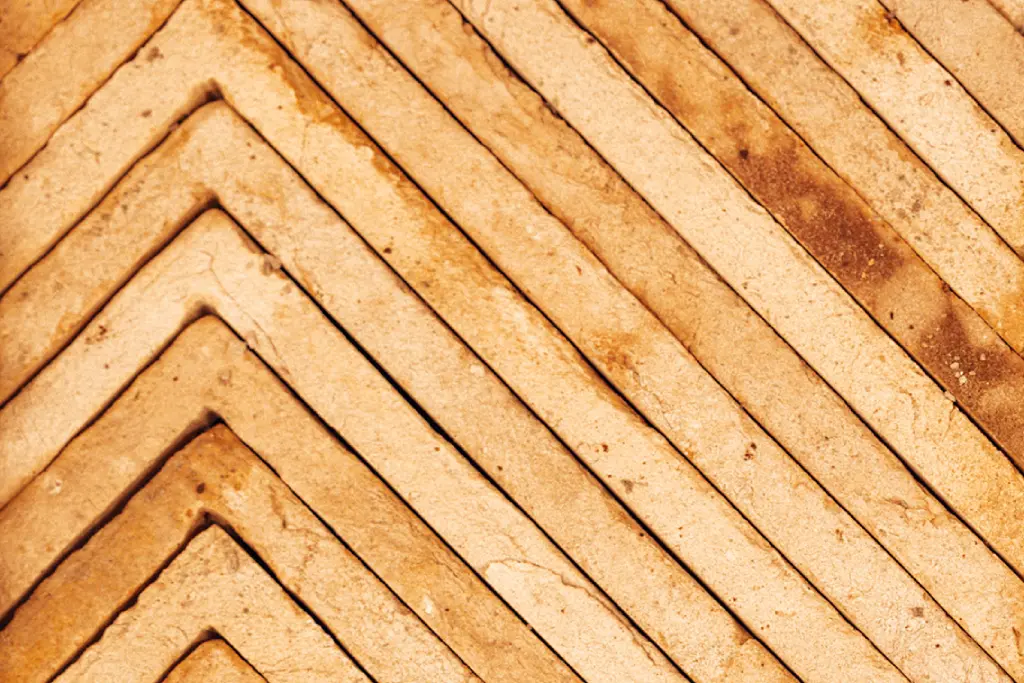
Above: Brick slip corners (also known as pistols).
Answers to a few common questions. Some we touched on earlier, others we haven’t.
Whether you can dry cut brick slips depends on what you’re cutting. If it’s simply a couple of cuts to existing brick slips to fit onto a wall, then yes, you can. Just make sure you’re wearing appropriate protective eyewear, an FFP3 dust mask and gloves to protect you from the brick dust.
If, however, you have a lot of slips to cut or are planning to cut brick slips from full-size bricks, we highly recommend using a wet cutting saw. Along with PPE, this minimises the risks from airborne silica in the subsequent brick dust, and produces cleaner cuts with little to no chipping.
No, it is not mandatory for you to hire a professional to cut your brick slips. But, if you have a large wall to cover and a lot of cuts to make, or you’re wanting to cut full-size bricks into brick slips, it’s more economical and less hassle for you to hire someone or use a brick slip cutting service.
It depends how many brick slips you need. If you need a handful for a small DIY job and have a cutting tool ready, we’ll be honest, it’s quicker and cheaper for you to do it yourself. Though, if you have a large wall to cover, you’re better off using a slip cutting service.
Covering a large wall space means you’re going to be making a lot of cuts. There are 60 standard metric slips to a square metre (m²) and even for a modest 4 or 5 square metre wall, that’s 240 to 300 slips – one cut per slip. Many domestic and day-hire saws will only handle one brick at a time, which equates to a lot of time spent cutting.
Add to that the disposal of the inner part of the brick, plus the clean up job, and it’s suddenly a much more tiresome task than you may have imagined. There’s also the added stress of managing health and safety; brick dust contains silica which is hazardous to respiratory health, so must be managed effectively with correct PPE.
A professional brick cutter will have specialised machinery that can cut bricks faster (our machines make two cuts simultaneously), specialist systems to manage dust and slurry, and a disposal or recycling method for the wastage.
Using a brick slip cutting service instead can save you time, frustration, and an awful lot of cleaning up.
Deciding whether to cut brick slips yourself or buy pre-cut comes down to what point you’re at in your project and the scale of the task ahead.
Here’s a simple way to look at your options:
You Haven’t Bought Any Materials Yet
If you’re purely in the research stage and haven’t committed to ordering any materials, buying pre-cut brick slips is by far the easiest option.
You can avoid the stress of cutting bricks yourself, easily order matching corner slips, and you don’t have to deal with hiring equipment and the inevitable clean-up job.
You Already Have Full-Size Bricks To Cut
Maybe you have leftover bricks from a recent project, have acquired some reclaims you want to reuse, or need an exact match to existing brickwork that you can’t find in pre-cut options. In these cases, cutting bricks is the only way to get the slips you need.
Unless you only have a handful of slips to cut, using a brick cutting service will save you the lengthy task of hiring equipment, repetitive cutting, dust management, and the big clean up job.
You are Working with Cladding Systems
Should you be planning to use a mechanical rail or precast brick slip cladding system, you’ll need special grooved profiles rather than standard flat-back slips.
You can either order them in advance, or get bricks of your choosing cut and grooved to specification.
We offer a range of brick slip choices suited to each type of cladding system:
If you don’t find anything that suits your project, or you’d like advice on options for your specific circumstance, feel free to contact our team who will be happy to point you in the right direction.